


Laser facial rejuvenation is a cosmetic procedure that allows you to smooth out small and medium-sized wrinkles.After manipulation, the skin is renewed, taut and elastic.During the process, the laser affects only a few layers, while the epidermis remains unaffected.Thanks to this technique, regeneration processes are activated at the cellular level and age-related changes are suspended.
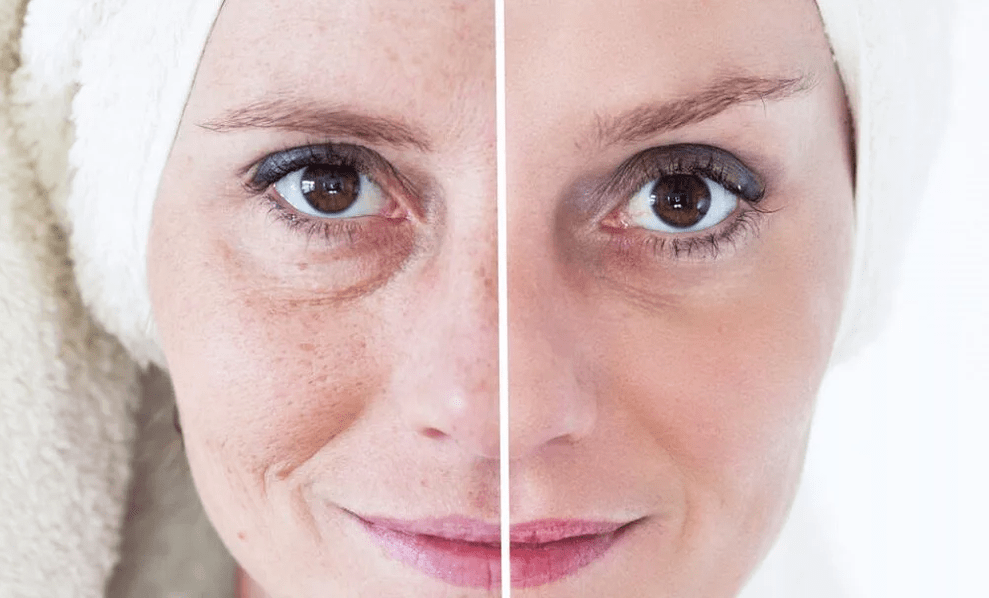
What is it
A facial laser in cosmetology is a special device whose main task is to convert energy into a high-intensity radiation flux.This tactic is very popular and is provided by many cosmetic clinics.
During the procedure, laser treatment is carried out on problem areas of the skin.In this case, the beam penetrates to a depth of one millimeter.As a result, old cells are destroyed and new cells begin to form in their place.
Various types of lasers can be used to perform facial rejuvenation treatments.As a rule, these are erbium, CO2 and neodymium.They differ from each other in wavelength, depth and methods of impact implementation.
Methods
Laser therapy for the face is divided into several types.
Fractional ablative rejuvenation
This technique involves targeted removal of cosmetic skin defects.Scientists have proven that in different zones of the epidermis cellular structures are at different stages of growth.As a result, in one area the skin will be damaged, while in others it will become softer and healthier.The ablative method of laser rejuvenation is used to provide targeted effects only on problem areas.
Laser biorevitalization
This is an innovative technology that is performed without surgery.Helps deal with imperfections such as deep wrinkles and scars.The work involves the application of short laser pulses that burn dead dermal layers, making room for the formation of new cells.
Furthermore, biorevitalization triggers the production of collagen and elastin fibers.To speed up the results, the skin is pre-treated with a special composition that reaches the deep layers and saturates them with all useful microelements.
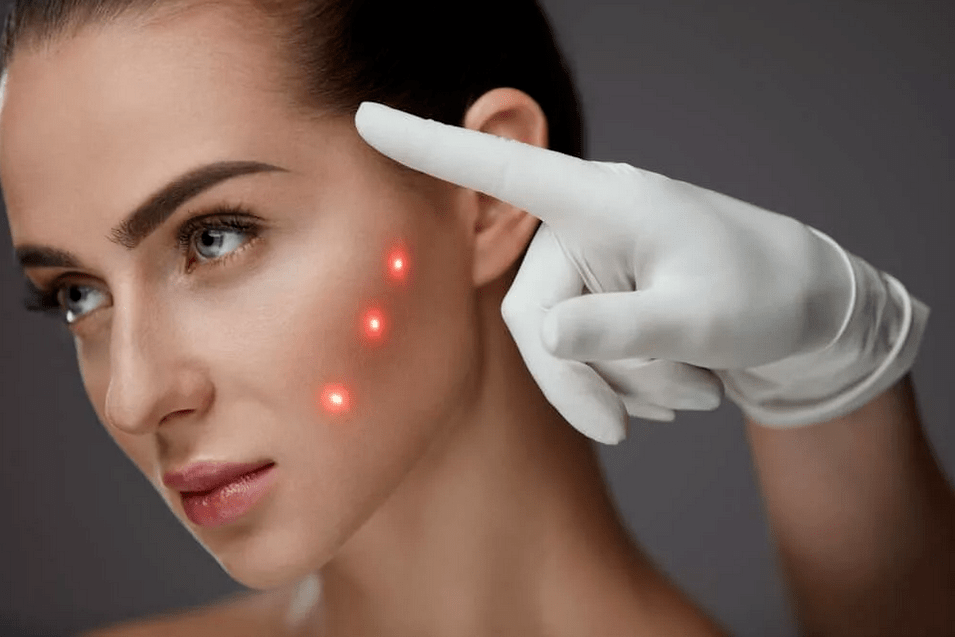
Non-ablative radiation
The surface of the face is exposed to long laser beams.This type of procedure is more serious in execution, therefore it is prescribed only if there are certain indications, for example, with deep scars, traces of chemical damage, severe skin rashes.
Non-ablative rejuvenation treats the entire surface of the face at once.
Laser resurfacing
This is one of the minimally invasive procedures.To correct age-related changes, a sapphire or erbium laser is used, resulting in a gentle but deep effect on the skin.
This facelift eliminates facial wrinkles, tightens the facial contour, eliminates acne and smoothes crow's feet.
Photorejuvenation
This is a combined method of all of the above procedures.In most cases, this tactic is used to improve skin tone and elasticity.
Indications
Laser facial skin rejuvenation is carried out in the presence of certain problems, including:
- signsphotoaging;
- consequencesacneand post-acne;
- acnescars;
- unevenshadowepidermis;
- trainingvascularrailings;
- expansionsince then;
- appearancewrinkles.
It is also recommended to carry out the procedure if there is a decrease in the state of tissue tension or if there is an increase in pigmentation.
Contraindications
Laser rejuvenation of the eyelids and face has certain limitations.
Therefore, in certain circumstances, manipulation will be refused.Among the main contraindications are the following:
- diagnosed with diabetesdiabetes;
- precancerouspathological processes;
- chronicdiseases in the acute phase;
- illnessesconnectingtissues of a systemic nature;
- infectiousand inflammatory processes in an aggravated form;
- epilepticconvulsions;
- oncologicalneoplasms;
- admission periodmedicinalmedicines that increase the skin's sensitivity to ultraviolet radiation.
Also, such a procedure is prohibited during pregnancy and breastfeeding.
Preparation
A laser rejuvenation session does not require special preparatory measures.The patient must first consult a doctor who will assess the general condition of the skin, identify the entire range of problems, and also make sure that there are no possible restrictions.
A few days before the scheduled date of manipulation, you should stop using decorative cosmetics, go to the solarium and sunbathe in the sun.
If the procedure is carried out in the summer, it is necessary to protect the skin from intense ultraviolet exposure.To do this, you need to apply sunscreen to your face before leaving the house.
Progress
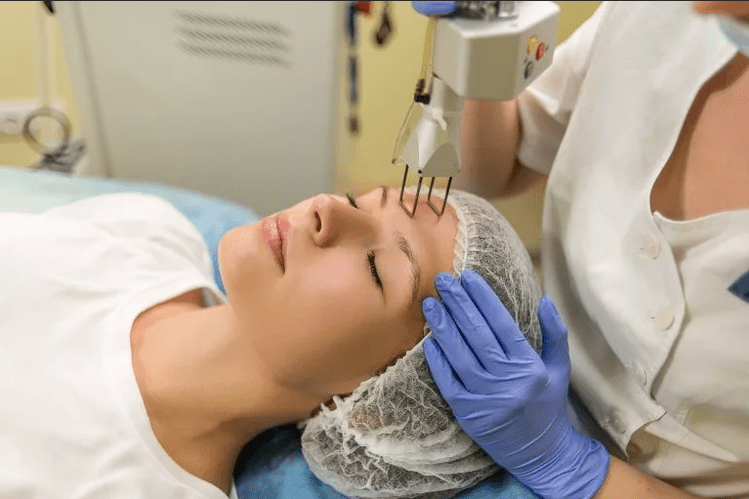
The entire laser rejuvenation process involves performing several sequential steps.First, the surface of the skin in the problem area is cleaned.Special scrubs or scrubs can be used for this.
Then, a small amount of anesthetic gel is applied, which allows the procedure to be carried out without causing discomfort to the client.
After that, the cosmetologist starts working directly with the laser.In a single session, depending on the severity of the existing problems, the entire surface of the face, décolleté and neck can be treated.
At the final stage, the epidermis is cleaned with a softening solution.
A session lasts around 60 minutes.
Duration and frequency of the procedure
To obtain the desired result, cosmetologists recommend taking a full course of laser rejuvenation, which may include 3 to 5 sessions with an interval of 14 to 21 days between them.
To maintain and enhance the effect in the future, you can do one procedure per year.
How long does the effect last?
Depending on the skin treatment method chosen, the results can last from 12 to 18 months.
Aftercare
After each session, a certain amount of time is required to restore the epidermis, as well as for the patient to follow a series of specialist recommendations.
For two weeks, moisturizer and products containing hyaluronic acid should be applied to the treated areas.
On the first day after the procedure, the use of decorative cosmetics is prohibited.In addition, until the epidermis is completely renewed, you need to forget about peeling.
To prevent the formation of age spots, cosmetologists advise using sunscreens with an SPF of more than 30.
For faster recovery after laser exposure, strengthening vitamin complexes are prescribed.You can use boiled water to wash your face.More time should be devoted to walks in the fresh air.
Only strict adherence to all skin care recommendations during the rehabilitation period will help not only maintain the results obtained, but also prevent the development of consequences.
Complications
Regardless of the effect on the skin, several side effects cannot be excluded after it.
Immediately after the laser rejuvenation procedure, redness, peeling and itching may occur.These symptoms are normal and go away on their own in a short period of time.
In rare cases, hyperpigmentation and scar formation are observed.Also, the herpetic virus can be activated, to eliminate which the doctor prescribes antiherpetic drugs.
Also, after cosmetic manipulation, the patient may be bothered by swelling and slight pain that forms on the surface of the treated area of the scab.
The reason for the occurrence of such adverse reactions in most cases is a violation of the technique for carrying out the procedure by a specialist or a failure to follow instructions by the client during the preparation or rehabilitation period.
Pros and cons
The advantages of laser rejuvenation include high efficiency, safety and no need for surgical intervention.Furthermore, cosmetologists highlight the fact that this technique is suitable for any skin type.
Among the main disadvantages are pain, the presence of various contraindications, the likelihood of negative reactions, a long recovery period and high cost.
Laser facial rejuvenation is considered the best alternative to injection methods in combating age-related changes.At the same time, it is important to understand that in the end the result will depend not only on the level of skill of the specialist, but also on the characteristics of the body and the client's compliance with all recommendations.